
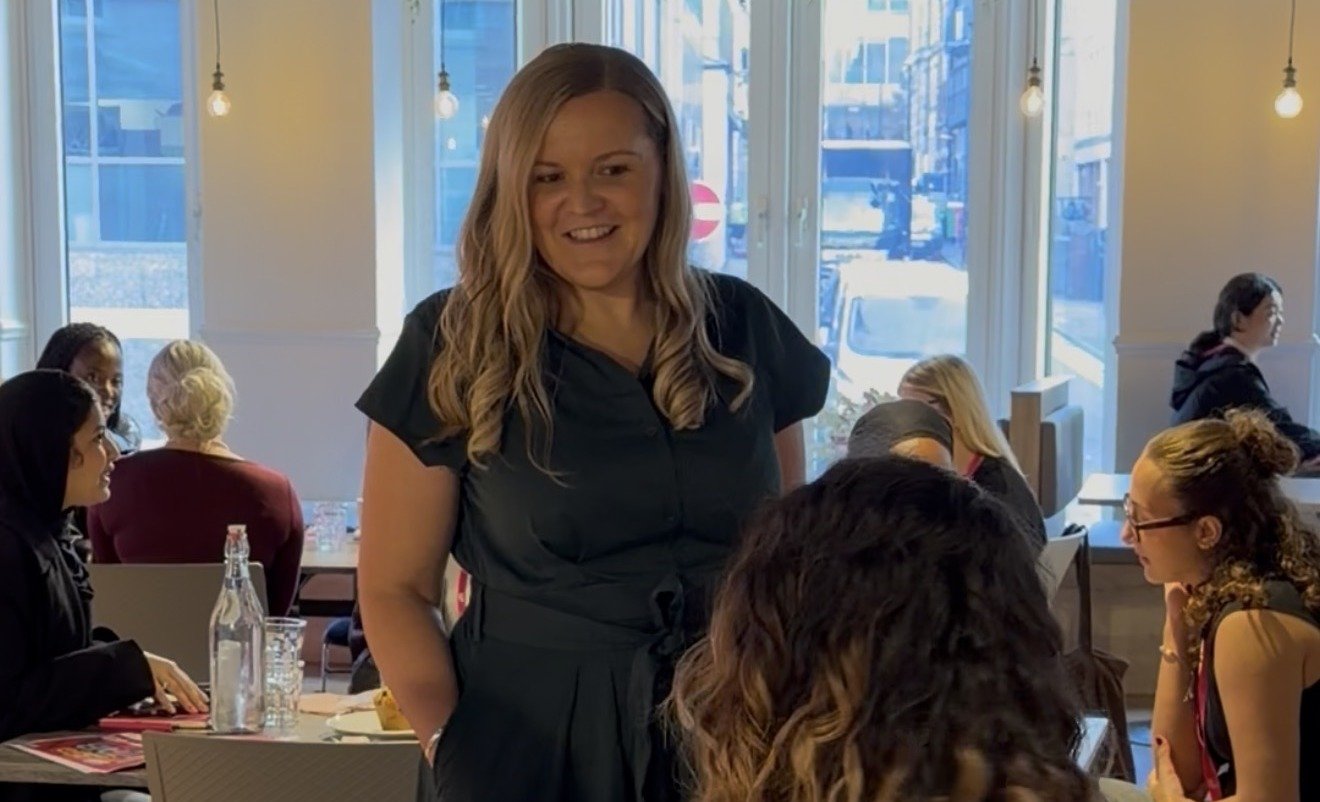
On 15 September 2026 I had the privilege of being a guest speaker at the Girls & Tech of Tomorrow Career Lab.
The room was full of enthusiastic, curious, chatty women who had actively applied to be there because they wanted to explore a future in tech. That in itself is exciting.
My job for the morning was to help them see two things. The tech industry is much bigger than they might think, and they may already have far more to offer it than they realise.
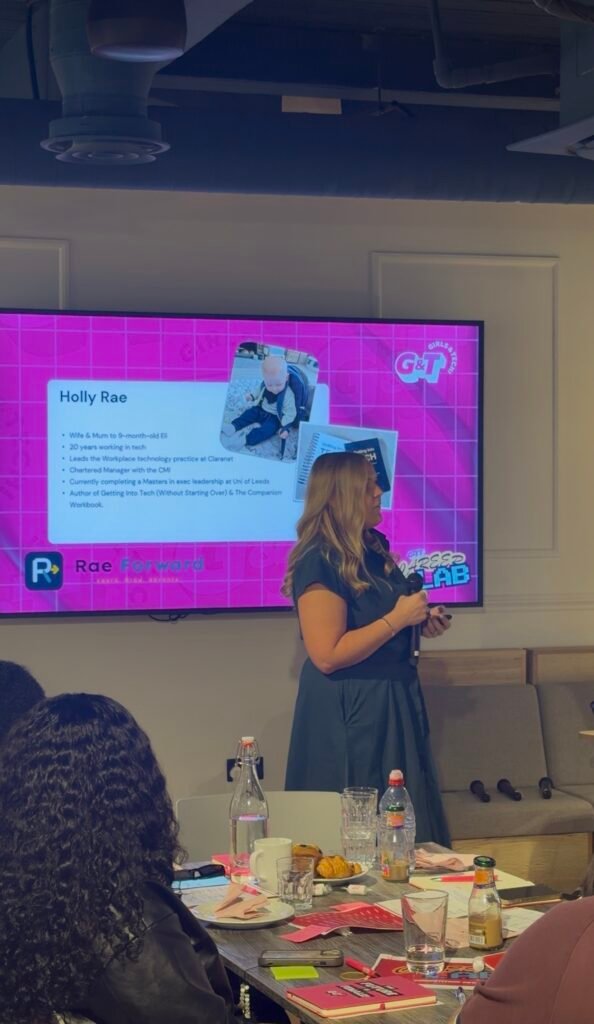
Tech is bigger than you think
I started by asking the room a question. When I say “someone who works in tech”, who do you picture?
Between us we built the usual picture. A bloke in a hoodie, headphones on, multiple monitors, writing code in a dark room.
He absolutely exists. He is also one person in a very big industry.
So we looked at something almost everyone in the room had in their pocket. A banking app.
It seems simple when you open it to check your balance or move some money. Behind it are people designing how it works, understanding what customers need, protecting it from cyber threats, managing the infrastructure, analysing the data, supporting customers when things go wrong and, yes, writing the code.
In my book I describe tech as six different worlds. We used that thinking to look at the range of roles involved in one everyday piece of technology.
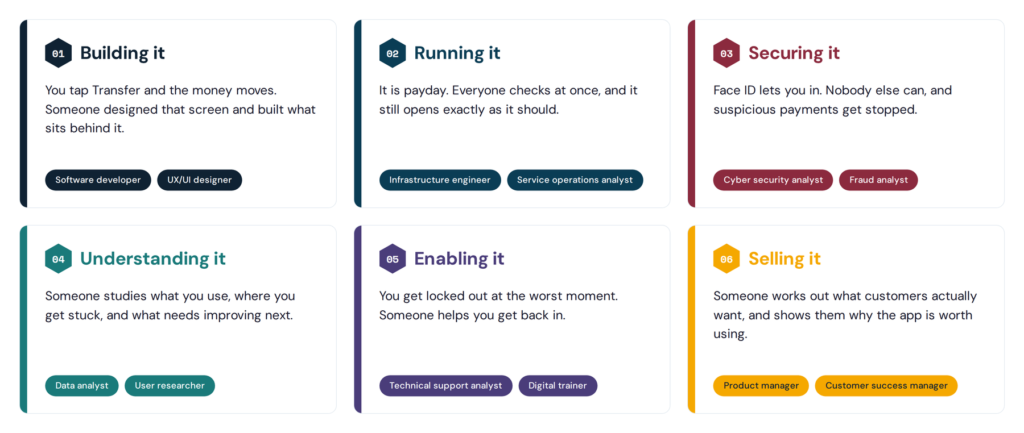
Six different worlds.
Hundreds of jobs in each one.
One of them writes code.
That matters. If someone’s idea of working in tech stops at becoming a developer, there are hundreds of careers they will never consider.
What did someone else see in you?
Then we moved to the part of the session I think I will remember most.
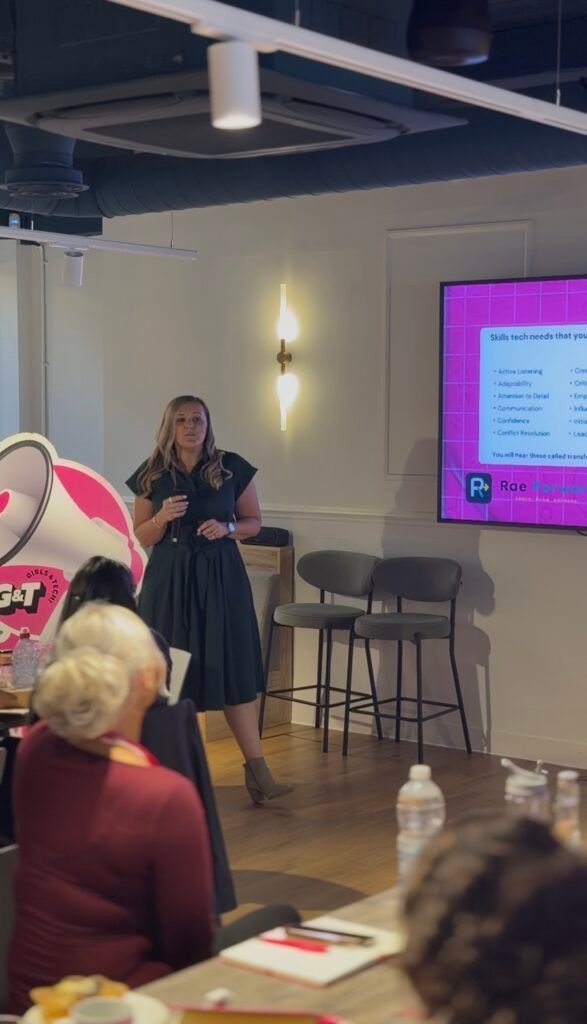
We talked about the skills technology needs that people might already have. Communication, adaptability, empathy, creativity, critical thinking, resilience, organisation, problem solving, teamwork and many more.
You will often hear these called soft skills. I call them core skills, also known as transferable skills. There is nothing particularly soft about handling a difficult customer or holding a team together when something has gone wrong.
Everyone chose a skill they already recognised in themselves and paired up with someone else in the room. They told their partner about a time they had used it, ideally when it had not been easy.
The person listening had a different job. Listen to the story, and identify the other skills you can hear in it.
Then I asked the room: did anyone have something identified that you had never really thought of as a skill you had?
Lots of people spoke up.
One woman had integrity reflected back to her. Another recognised resilience in the woman she had been talking to.
These were not skills I had stood at the front and told them they had. They heard them in each other’s experiences.
That was the point. Sometimes we are so close to our own experiences that we do not recognise what it took to get through them. Someone else can listen to exactly the same story and hear adaptability, leadership, patience, confidence or resilience.
You do not necessarily need to start again
One conversation particularly stuck with me.
A woman told the room that the person she had been speaking to had previously worked in medicine and was now interested in AI.
My immediate question was, why do those two things need to be separate?
Why leave all that knowledge and experience behind to start again in technology?
What could happen if you brought it with you?
That is something I care deeply about, and unsurprisingly it is a big part of why I wrote Getting Into Tech (Without Starting Over).
Your transferable skills belong to you. They grow with your experiences. You take them with you.
Try it yourself
If you were not in the room, you can still do this exercise. It works just as well over a coffee with one person as it does in a room full of them.
Think of something you are known for. Not a job title, a thing people come to you for. Then think of a time you used it when it was genuinely difficult.
Now tell someone the story and ask them what they heard. A friend, a colleague, your partner, anyone.
I suspect they will name something you would never have claimed for yourself. That is not modesty, it is just how it works. We are the worst judges of what we bring, because to us it is simply how we get through the day.
If it helps, you can download a version of the card we used on the day. It has eighteen skills on one side, the five steps of the exercise, and space on the back to work out what you want to do next. Print it, scribble on it, pass it to someone.
Keeping the conversation going
I left a copy of Getting Into Tech (Without Starting Over) for every woman in the room.
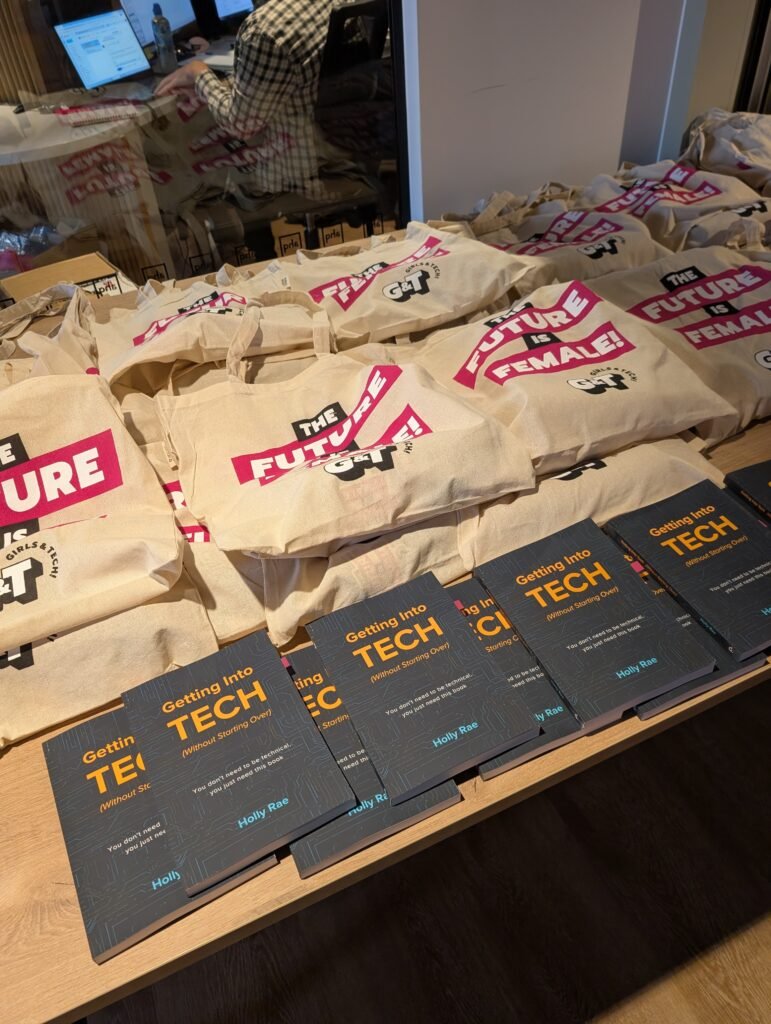
Not because I expected anyone to go home and read it cover to cover. Quite the opposite.
The note I left inside encouraged them to dip in and out, skip the bits that are not for them, scribble in it, come back when something clicks, and hopefully find something in those pages that makes them think, “I could see myself doing that.”
I wanted the conversations from the Career Lab to carry on after everyone went home.
Since then I have started seeing posts and messages from some of the women who were there, including photos of highlighted pages. One wrote:
I have barely even started reading it and I am already highlighting parts like crazy. The part that I have highlighted in pink really stood out to me because this is essentially how I started in tech as well.
Seeing someone already finding something that speaks to their own journey is pretty special.
The message I left them with was simple. Stay curious, keep exploring, and do not rule yourself out of something just because you have not considered it before.
Proud to be a small part of it
I could only be there for part of the day, which I was genuinely sad about. Even so, it was obvious how much thought, energy and care had gone into creating the whole thing.
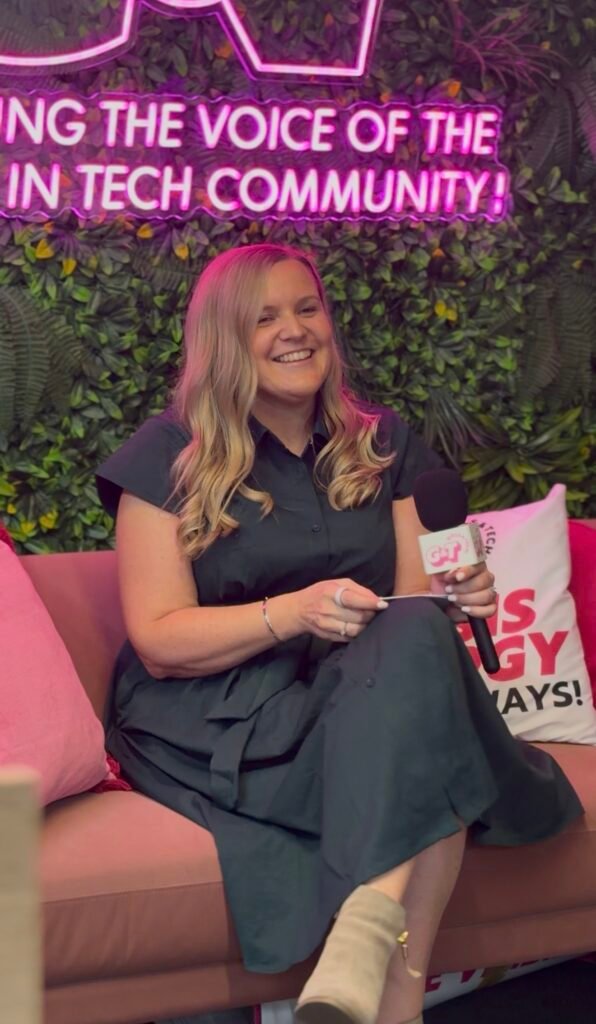
Events like this do not just happen. They take people who care enough to create the opportunity, bring people together and build an environment where women feel able to ask questions and have conversations they might not otherwise have.
A massive thank you to Bex, Georgie and the whole Girls & Tech of Tomorrow team for inviting me in and trusting me with part of the day.
Most of all, thank you to the women in the room. For talking. For sharing. For being curious. For listening to each other.
I hope you left knowing a little more about how big the world of tech really is. Even more importantly, I hope you left knowing a little more about what you already bring to it.