

What does a job in tech look like if you are not a developer or engineer?
That question is more difficult to answer than it should be.
Many people know that “non-technical jobs in tech” exist, but the job titles are unfamiliar and the descriptions are often full of language that makes simple work sound unnecessarily complicated.
The first thing to understand is that “non-technical” does not mean disconnected from technology.
You may work closely with technical teams, products and services. You will need to learn enough to understand the environment and perform your role well.
What you may not need is coding, engineering or responsibility for configuring the technology yourself.
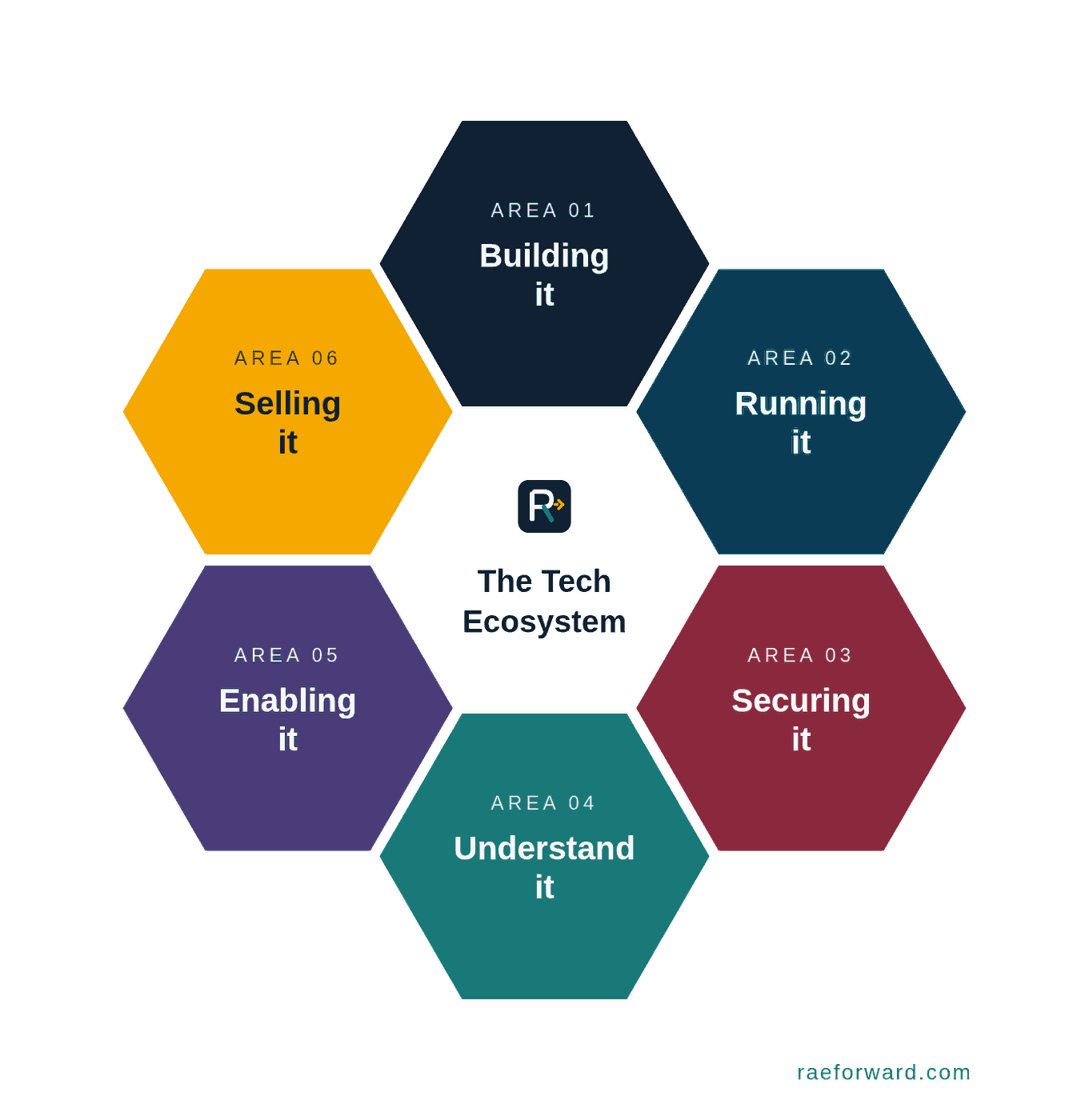
Here are some of the roles that make the technology industry work.
Roles that organise and deliver
Project coordinator
A project coordinator supports the organisation of a piece of work.
They may arrange meetings, track actions, update plans, manage documentation and help the project team stay on schedule.
This can be a useful entry route for someone with strong administration, organisation and communication skills.
Project manager
A project manager is responsible for moving a project towards its intended outcome.
They manage timelines, budgets, risks, decisions and stakeholders. They need to understand what is being delivered, but they are not usually the person building the technology.
Delivery manager
A delivery manager focuses on helping a team deliver work effectively.
The role can include removing blockers, improving ways of working, coordinating priorities and helping different people stay aligned.
The exact meaning varies between organisations, so always read the responsibilities rather than relying on the title.
Service delivery manager
A service delivery manager helps ensure an ongoing technology service performs as expected.
They may work with customers, technical teams and suppliers, monitor performance, manage issues and lead service reviews.
This can suit someone who enjoys relationships, organisation and resolving problems calmly.
Roles that understand problems and improve processes
Business analyst
A business analyst helps an organisation understand what it needs and why.
They gather information, map processes, explore problems, document requirements and help business and technical teams understand each other.
Strong business analysts ask good questions. They do not simply write down what the first person tells them.
Process analyst or improvement specialist
These roles examine how work happens and where it could be improved.
They may use data, workshops and process mapping to identify waste, delays, duplication or confusion.
Experience in operations, administration, quality or continuous improvement can transfer well.
Product manager
A product manager helps decide what a product or service should do and which problems should be prioritised.
They balance customer needs, business goals and technical realities. They work closely with developers and designers but do not usually build the product themselves.
Product owner
A product owner often works more closely with a delivery team on the detail of what should be built next.
The difference between product manager and product owner varies by organisation. In some companies they are distinct roles. In others, one person does both.
Roles that support people and change
Change manager
A change manager focuses on the people side of organisational change.
They help leaders and employees understand what is changing, why it matters and what support is needed.
The work may include stakeholder planning, communications, readiness activity, training and feedback.
Digital adoption specialist
A digital adoption specialist helps people use technology successfully.
They may create learning materials, run sessions, identify barriers, develop champions and track whether new tools are becoming part of everyday work.
This can suit teachers, trainers, communicators and people who enjoy building confidence in others.
Learning and development specialist
Technology organisations need people who can design and deliver learning for employees, customers and partners.
The role may involve training platforms, learning content, workshops and assessments. Technical knowledge can be developed around strong learning and facilitation skills.
Technical writer
A technical writer turns complicated information into clear guidance.
They may create product documentation, user guides, knowledge articles, help content or internal processes.
The role requires curiosity, accuracy and the confidence to ask specialists to explain what they mean.
Roles that work with customers and commercial outcomes
Customer success manager
A customer success manager helps customers achieve the outcome they expected from a product or service.
They build relationships, understand goals, encourage adoption, identify risks and connect customers to the right expertise.
The role is particularly common in software and subscription businesses.
Account manager
An account manager owns the commercial relationship with a customer.
They may discuss renewals, new requirements, satisfaction and future opportunities. Some roles are strongly sales-focused. Others place greater emphasis on long-term relationships.
Technology sales
Technology sales includes roles such as business development representative, sales development representative, account executive and sales specialist.
You do not need to build the product, but you do need to understand the problem it solves and communicate its value honestly.
Pre-sales or solutions consultant
Pre-sales roles help customers understand how a product or service could meet their needs before they buy it.
Some positions are highly technical. Others combine discovery, presentation and commercial skills with support from technical specialists.
Read the requirements carefully because the same title can describe very different levels of technical depth.
Roles that understand users and experiences
User experience researcher
A user experience researcher studies how people interact with products and services.
They may conduct interviews, observe behaviour, test ideas and identify where users become confused or frustrated.
They bring evidence about real people into design and product decisions.
User experience designer
A user experience designer shapes how a digital product works from the user’s perspective.
This is a specialist discipline and usually requires a portfolio. It does not necessarily require coding, although understanding how digital products are built can help.
Customer experience specialist
Customer experience roles look across the whole relationship a customer has with an organisation.
They may analyse feedback, map customer journeys and work with teams to improve difficult or inconsistent interactions.
Roles that manage information, risk and standards
Data governance specialist
Data governance professionals help organisations manage information properly.
They may define ownership, quality standards, policies and controls. The role is about making sure data is understood, trusted and used responsibly.
Governance, risk and compliance specialist
These roles help organisations operate within legal, regulatory and internal requirements.
They may assess risk, review controls, maintain policies, support audits and track actions.
Attention to detail, judgement and the ability to explain requirements clearly are important.
Cyber security awareness specialist
Not every cyber security role is deeply technical.
Awareness specialists help employees understand security risks and build safer habits. They may create campaigns, training, simulations and communications.
The role combines an understanding of security with communication and behaviour change.
Quality assurance tester
A tester checks whether a product or system behaves as expected.
Some testing roles involve automation and coding. Manual testing roles focus more on following scenarios, finding problems, documenting evidence and thinking about how users might behave.
Roles that support everyday technology
Service desk analyst
A service desk analyst helps users when technology is not working or when they need access, advice or support.
The role requires patience, problem-solving and communication. Technical knowledge is needed, but coding usually is not.
It can provide a practical entry point and exposure to different areas of IT.
IT trainer
An IT trainer helps people understand and use systems or applications.
They may deliver live sessions, create guides and tailor support to different confidence levels.
Teaching, facilitation and communication experience can transfer strongly.
Which category sounds most like you?
The job title matters, but the type of work matters more.
Ask yourself whether you are most drawn to:
- organising people, deadlines and delivery
- understanding problems and improving processes
- helping people adapt and build confidence
- building customer relationships
- shaping products or experiences
- managing risk, information and standards
- solving practical user problems
Your answer will not give you one perfect job title.
It will help you narrow the search.

How to research a role properly
Choose up to three roles and look at several job adverts for each one.
Do not focus only on the list of requirements. Look for patterns in the work.
Ask:
- What outcome is this person responsible for?
- Who do they work with most often?
- What would an ordinary week involve?
- Which skills appear repeatedly?
- Which requirements are genuinely essential?
- Which parts sound energising, and which sound draining?
- What could I already evidence from my current experience?
Then speak to a real person doing the role.
A job advert will rarely tell you what the work feels like three months in.
A note about job titles
Technology job titles are inconsistent.
A delivery manager in one organisation may do work that looks like project management. A customer success role may be focused on adoption in one company and renewals in another. A product owner may be highly strategic or very delivery-focused.
Never choose a career based on the title alone.
Read the responsibilities. Compare multiple adverts. Ask people what they actually do.
So, what are the non-technical jobs in tech?
There are more than most people realise.
They exist wherever technology needs to be planned, explained, sold, supported, governed, improved or adopted.
You may still need to build technical understanding. You may work closely with specialists. You may learn new tools and terminology throughout your career.
But you do not have to become a developer to make a meaningful contribution.
Getting Into Tech (Without Starting Over) explains these roles in more depth and helps you connect them to the skills you already have. The companion workbook takes you through a role shortlist, comparison and learning plan so you can move from “that sounds interesting” to a clearer direction.
Start with the work, not the title.
The right role is the one that fits how you naturally contribute and where you want to grow.